Construction Crew Discovers 1,000-Pound WWII Bomb in Florida
Construction workers at the upcoming Wilton Simpson Technical College Campus in Brooksville made a startling discovery as they stumbled upon a decaying 1,000-pound Mark 65 bomb from World War II during routine excavation near the Brooksville-Tampa Bay Regional Airport.
By Beth Snider · February 9, 2024
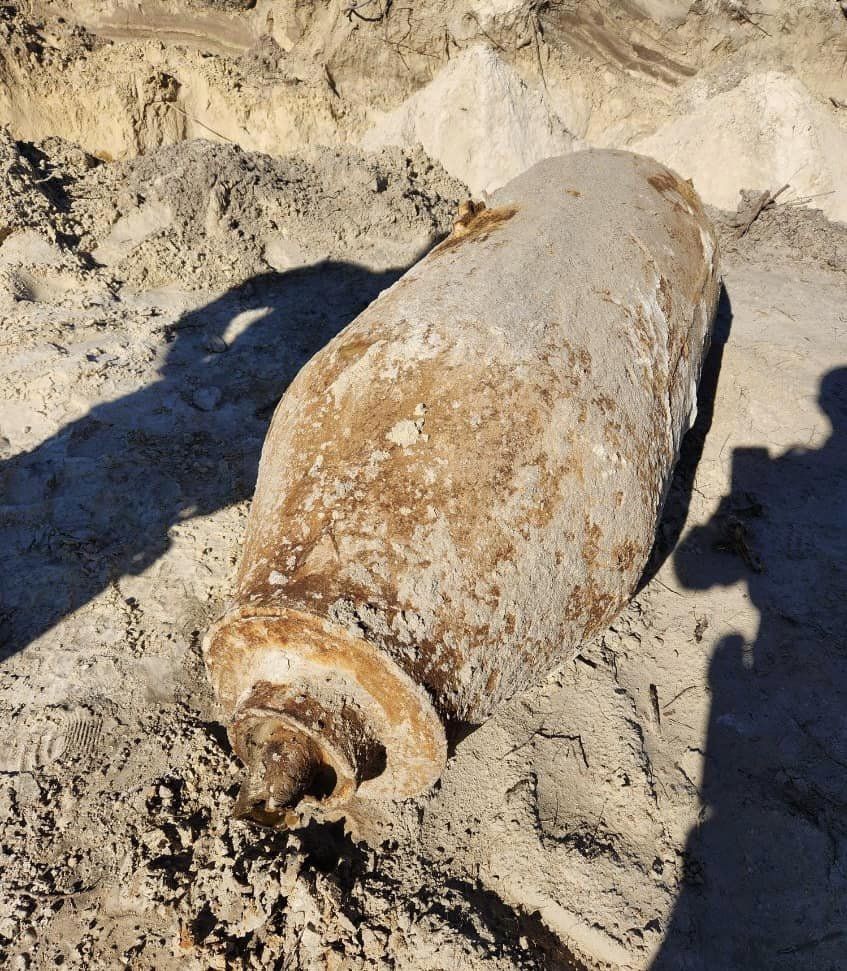
Construction workers at the future Wilton Simpson Technical College Campus in Brooksville, near the Brooksville-Tampa Bay Regional Airport, stumbled upon a piece of history on Tuesday as they uncovered an inert World War II-era bomb. The Hernando County Sheriff’s Office revealed that the decaying Mark 65, a 1,000-pound bomb dating back to WWII, was found during routine excavation.
Upon the discovery, authorities swiftly evacuated the area within a half-mile radius and closed nearby roads as a precautionary measure. The Citrus County Sheriff’s Office Bomb Team was called in to assess the situation. Fortunately, experts determined that the bomb was inert, alleviating concerns about potential live ammunition, and allowing for the safe reopening of the area and roads.
Sheriff Al Nienhuis explained in a video posted on social media, “Because it is so rusted and decayed, there is certainly no way of telling whether it’s live ammunition or inert.” Following the assessment, it was confirmed that the bomb would be disposed of by a crew from MacDill Air Force Base in Tampa.
The origins of the bomb are believed to be connected to the World War II-era military airfield that once occupied the site before it became the Brooksville-Tampa Bay Regional Airport. This airfield played a crucial role in training exercises for B-17 Flying Fortresses and B-24 Liberators.
The Mark 65 bomb, identified as a general-purpose ordnance used against reinforced targets, such as dams and concrete or steel railroad bridges, holds historical significance. Dr. Angie Zambek, an associate professor of history at UNC Wilmington, explained, “The bomb itself was an unguided gravity bomb, essentially just TNT in metal casing.”